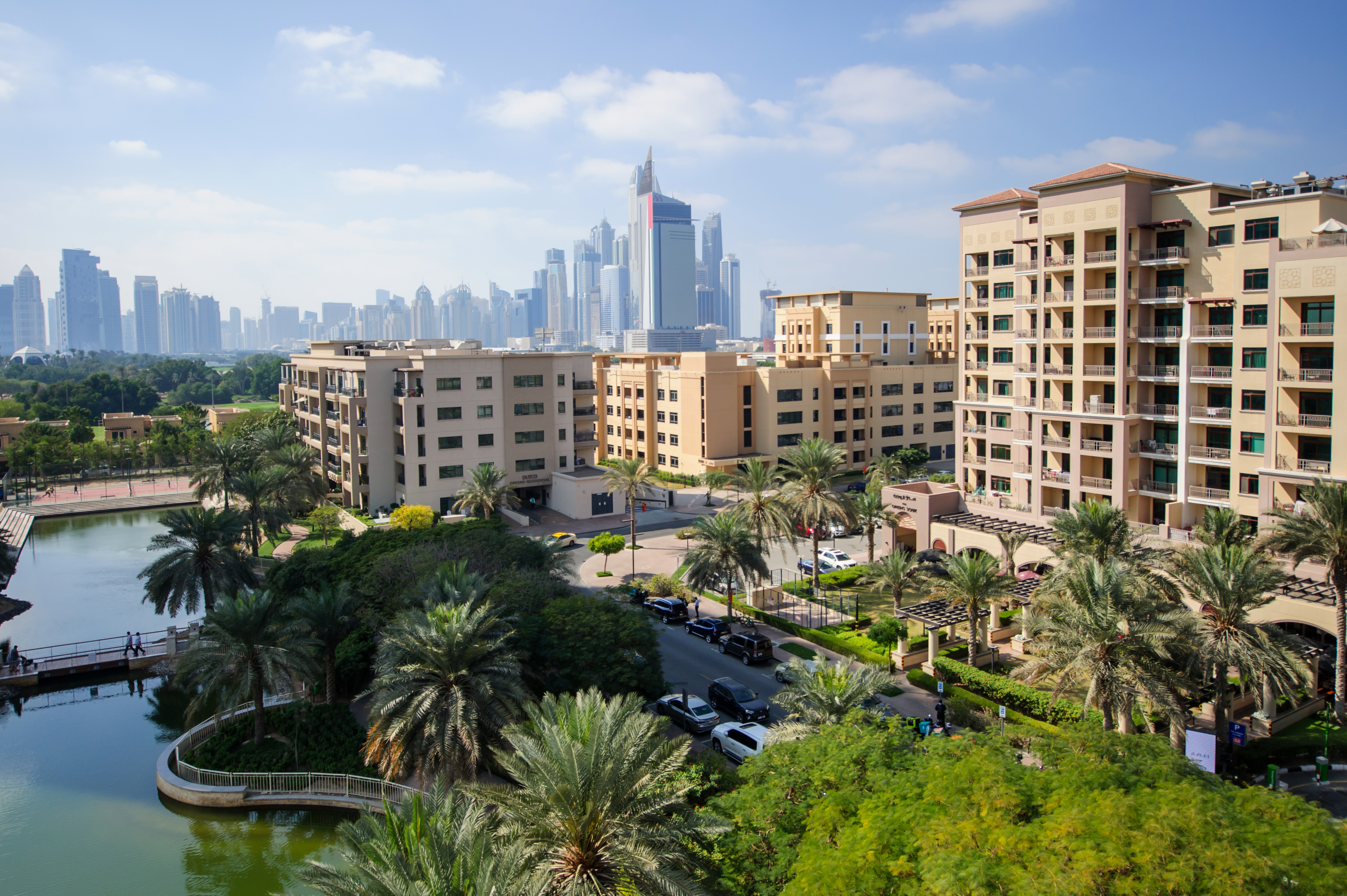

Since the beginning of mankind, most inhabitable lands on our Earth were originally forests or vegetated areas. However, over time, these biodiverse landscapes have been replaced by agricultural and urban developments. Now our cities are predominantly compromised of concrete. Cities and buildings have been designed in a way where vegetation is often omitted, unfortunately depriving us of its inherent benefits.
For decades, asphalt, concrete, glass and other impervious manmade surfaces played a part in killing biodiversity, wasting water, intensifying Urban Heat Island effect and reducing air quality in our cities.
Fortunately, our world is changing. A global green conscience has emerged in recent years, pushing consumer, commercial, business and industrial sectors towards greener practices. For the construction industry, it’s green architecture that has emerged as the key to building for the future. Green architecture is today more than just a sustainability trend, it is a new approach that supports safe urban development for generations to come.
There is growing evidence that the integration of green and blue-green architecture creates cities that deliver a range of social, economic and environmental benefits. More buildings are being successfully ‘greened’ around the world. Building designs are being increasingly created with green elements at their core and many existing buildings are even being retrofitted with greener features.
One way in which more cities are incorporating green architecture is through green or blue roofs. A green or blue roof is a roof surface partially or complete covered with a lightweight growing medium and plants, planted over a waterproofing system that can capture, store, treat and reuse water. In addition to bringing us closer to nature, the structure of a green roof basically imitates the Earth’s natural water cycle, helping us to better manage resources and save costs.
8 reasons why green roofs are so important for us to truly create greener cities that support human health, public safety, sustainability and economic growth:
The waterproofing systems integrated into green roofs support cyclic water management to consume resources more efficiently. Green roofs use SuDS that harvest and reuse water, including filtering pollutants from rainfall, to improve water quality and quantity.
The water management systems used in green roofs can be particularly effective in the Middle East where flooding is a challenge. Green roofs can retain 70-90% of stormwater and reuse it for diverse purposes from irrigation to drainage. The integration of a green roof can also help reduce the risk of flooding by 80%.
A modeling study in Washington D.C showed that if 20% of the city’s roof surfaces were covered with green roofs, the pollutants absorbed would be the equivalent of those absorbed by 25,000-33,000 trees. Green roofs are effective at fighting against our most common pollutants such as Ozone (O3) and other nitrogen compounds, which can cause serious health risks. The vegetation can absorb these compounds and break up their circulation patterns.
Vegetation is effective at absorbing CO2 and expelling oxygen. Furthermore, green roofs improve energy efficiency in buildings by lowering AC demands. In addition to the removal of pollutants, emissions from conventional power sources are lowered.
As our landscapes have moved from green to grey, Urban Heat Island effect is a growing phenomenon in our cities. Incorporating more greenery can help to lower city-wide ambient temperatures by up to 4°C and cool buildings more effectively to reduce AC demands by up to 75%.
More effective use of resources such as water and electricity can enable major cost savings for buildings that incorporate green roofs. Green roofs basically remove heat from the air through evapotranspiration, cooling surrounding temperatures and creating more efficient, self-sufficient structures.
Green roofs support biophilic design, creating more comfortable and happy environments that are proven to have a positive effect on physical and mental health. Furthermore, these spaces are multifunctional and can be used for diverse purposes from aesthetically pleasing green gardens to fitness amenities or even for commercialization, creating healthier and more desirable buildings.
Green roofs act as safe spaces for plant and animal species to thrive, this includes the creation of urban farms that can help to improve food security and quality in cities. Furthermore, they support the presence of key species such as bees in cities, who are integral to human survival.
In the Middle East, the future is green. Initiatives such as the Dubai 2040 Urban Master Plan aim to double the area of green spaces in the city. As a city dense with high-rise buildings, there is a great opportunity to leverage the power of green roofs to achieve these goals.
In a way, green roofs take us back to time where nature lay at the heart of humanity. Just like the many cycles we see in nature, the human population is too circling back into an era where the role of nature is vital for us to survive and thrive.
One solution that supports the creation of green roofs is Permavoid - a geocellular water management solution that enables the construction of green/blue-green roofs and podium decks through shallow water storage or infiltration. The system allows for the adoption for a “source control” water strategy that imitates the Earth’s natural water cycle – capture, store, treat and re-use – rather than a traditional linear system where water is treated as waste product.
Our award-winning solution, Permavoid, provides an innovative drainage solution in urban settings that not only intercepts stormwater, helping to prevent flooding, but also manages it efficiently and effectively using vegetation. Energy from the sun, typically absorbed by building materials, is instead channeled into the process of evaporation, for which plants are necessary. Through this process, heat is dissipated, lowering surrounding air temperatures.
Adopting a holistic approach to water management allows cities to turn rainwater into a valuable resource. Installing solutions that support SuDS, such as our signature system, Permavoid, can deliver benefits to improve water quality, quantity and general quality of city life.
For solutions that can help ‘green’ your project, including the creation of green roofs, do not hesitate to contact us.